Understanding Floor Heaving
Defining Floor Heaving in Concrete Slabs
Concrete floor heaving describes the upward movement of a slab caused by pressure from below. It is not a surface issue. The slab itself moves, cracks, and loses level. In South Africa, expansive clays and tree roots are common culprits, but heaving can also follow water leakage or poor compaction.
The condition is distinct from settlement, where the ground drops away. Heaving pushes up! In my experience, telltale cracks form a rough pattern across the floor, often accompanied by a visible ridge.
Typical signs include:
- Cracks that are wider at the top
- Doors that no longer close properly
- A noticeable slope or tilt in the floor
These indicators help separate heaving from other concrete floor failures. Concrete floor heaving requires a serious assessment, because the forces involved are strong enough to lift entire foundations.
How Heaving Differs From Floor Settling
A floor that refuses to stay put ruins a day. Concrete floor heaving and floor settling are different problems. With settling, the support beneath the slab gives way. With heaving, the ground shoves upward, and the direction changes how you diagnose the failure.
In my experience, the biggest clue comes from timing. Settlement tends to show up early, after the soil beneath fresh fill compresses. Concrete floor heaving, by contrast, develops over years. It can arrive after a wet season, a burst pipe, or the swelling of South African clays. The two failures behave differently over time:
- Settling mostly stabilizes once the soil finishes compacting.
- Heaving can keep moving long after you notice it, shifting with the moisture cycle.
That difference changes your response. You can sometimes wait out settlement, monitoring cracks and levels. Heaving demands attention! It will not resolve itself, and the longer it moves, the harder the repair.
Areas Most Vulnerable to Heaving
Walk across a cold garage slab in Gauteng after a dry January, and you might feel the tilt before you see it. Concrete floor heaving rarely announces itself evenly. Some areas show movement sooner than others.
The most vulnerable areas share one trait: moisture that cannot escape. Expansive black clays across the Highveld absorb water after heavy rains and swell with a slow, relentless force. A leaking pipe or a neighbor’s overflowing gutter can trigger the same response. Poorly compacted fill under a slab adds to the problem.
Locations at highest risk include:
- Low-lying corners where water pools during thunderstorms.
- Slabs next to large trees whose roots shift soil moisture in cycles.
- Edge beams with poor drainage or cracked stormwater lines.
Concrete floor heaving in these zones develops quietly, but the pattern is readable if you know where to look. Within a year, the same floor can rise centimeters.
Root Causes of Slab Heave
Expansive Soils and Moisture Fluctuations
Some soils respond violently to water. In South Africa, the black vertisols of the Highveld swell when wet and shrink when dry. This constant movement stresses a concrete slab. Moisture fluctuations drive the process. A broken stormwater pipe, a leaking irrigation line, or a season of heavy rain saturates the ground. The clay absorbs water and expands upward with surprising force!
Here is what happens in sequence:
- The clay layer beneath the slab increases in volume.
- The slab is pushed upward unevenly.
- Cracks form along stress points.
We see this constantly in the field. That uneven movement is concrete floor heaving, and it worsens with every wet season.
Frost Heave and Freeze-Thaw Cycles
One winter night, a corner of your garage floor can rise several centimetres. Frost heave is the culprit! When groundwater freezes beneath a slab, the expansion is powerful enough to lift a foundation edge. In South Africa, the risk sits in the Drakensberg foothills and the Karoo’s winter frost zones, where night temperatures plunge below zero and recover by midday.
The freeze-thaw cycle repeats itself. Each night drives another pulse of ice into the soil. Each morning leaves voids that refill with water, ready for another round. This repetition is what makes heaving so destructive.
The damage follows a clear sequence:
- Water collects beneath the slab.
- Ice lenses form and push upward.
- The slab lifts at its weakest edge.
- Thaw drains the ground.
- The slab drops, leaving cracks.
Concrete floor heaving from freeze-thaw cycles shows up as sticking doors or cracked tiles. By then, the cycles have done significant damage.
Tree Roots and Vegetation Pressure
A single tree root can lift a 500 kilogram slab. This is not a slow process. Roots invade hairline cracks beneath your concrete and expand as they absorb water. The pressure they exert is immense.
In South Africa, oak, pine, and blue gum trees are the most common offenders. Their roots travel far beyond the canopy, pulling moisture from the soil under your foundation. The ground loses support, and the slab settles unevenly. This is concrete floor heaving in its most deceptive form.
- Roots remove water, causing soil shrinkage.
- Root growth physically pushes against the slab.
Vegetation pressure follows the same destructive path. Dense root mats anchor the soil on one side while the other side remains empty. That imbalance lifts your floor.
Subgrade Compaction and Fill Material Failures
Subgrade compaction separates a durable floor from a predictable failure. The ground needs to be the most solid thing on the site, but it is often rushed. In South Africa, a slab is only as reliable as the soil beneath it. When the subgrade settles, concrete floor heaving follows.
Builders must compact soil in thin lifts, yet thick layers often leave the base soft and uneven. Poor fill material makes it worse. Sites frequently get filled with materials lacking structural integrity.
Here are the worst offenders:
- Construction rubble, which leaves voids that collapse over time.
- Organic topsoil, which rots and decreases in volume.
- Expansive clay used as fill, which swells when wet and shrinks when dry.
These materials create an unstable base. Uneven pressure and movement cause concrete floor heaving. Checking what lies beneath the slab is the only way to fight this. But when fill material is already in place, heaving becomes unavoidable.
Recognizing the Warning Signs
Cracks and Fractures in Slab Surfaces
Cracks in a slab are rarely cosmetic. They are warning signs. A hairline fracture may stay harmless for years, then shift overnight. Watch for patterns. Horizontal cracks indicate lateral pressure. Stair-step cracks along block joints suggest differential movement. Crazing, a network of fine surface cracks, often signals shrinkage, not structural failure.
The most telling sign of concrete floor heaving is a crack that widens at one end and narrows at the other. That directional gap means one side is rising. Also check for:
- Cracks that reappear after patching
- Edges that feel raised or sharp
- Gaps between the slab and walls
Those signs point to ongoing movement. Ignoring them does not stop the heave. It only hides the evidence.
Lifted or Uneven Sections of Floor
Here is where the floor stops pretending. A lifted slab does not hide. It announces itself with a slope you can feel through your shoes. South African homeowners often mistake the unevenness for a bad tile job or a settling foundation. That is a costly misunderstanding.
Stand at the edge of the suspected area and look across the surface. A rise of even five millimetres creates a visible shadow line. Walk over it in bare feet. You will feel the change before you see it! The section that has moved upward will feel firm under pressure, while the surrounding floor gives slightly. That contrast is the signature of concrete floor heaving.
- Doors that used to swing freely now catch on the floor
- Furniture that rocks on three legs instead of four
- Skirting boards that no longer meet the slab
Each item on that list is a measurement of movement. The floor has chosen a new position and it will keep it until something forces a change.
Structural Issues in Doors and Framing
A door that sticks is often the first sign of concrete floor heaving. The frame shifts, the jamb twists, and the door leaf begins to scrape against the floor or the head. Homeowners in Johannesburg and Durban often blame humidity or cheap hinges. The real cause is a slab that has lifted beneath the frame.
Examine the gap between the door and its frame. If it narrows at the bottom but stays even at the top, movement is underway. Watch for these specific changes:
- The latch misses the strike plate, so the door needs a hard push.
- The frame pulls away from the wall, leaving a hairline crack in the plaster.
- The door scrapes the floor along one edge when it is halfway open.
These are structural issues in doors and framing, not cosmetic annoyances. They measure the same upward pressure that drives concrete floor heaving in the slab below.
Dampness and Water Intrusion Clues
Moisture seldom announces itself. It creeps through the subgrade, climbs the capillary walls of the slab, and leaves faint evidence in corners that rarely see daylight. A persistent musty smell, a dark patch that returns after scrubbing, or efflorescence forming along the skirting board all point to water moving beneath the surface. These clues often appear months before concrete floor heaving becomes visible.
- A damp patch that expands after rain and shrinks in dry spells.
- Water beads or a slick film on the slab surface, even when the room is dry.
- A sudden rise in humidity that lingers, especially near load bearing walls.
Each clue maps the movement of groundwater. When the soil beneath the slab absorbs that moisture, it swells and pushes upward. The concrete does not fail all at once. Concrete floor heaving follows the same slow path, and the water leaves evidence for those who look.
Assessing and Diagnosing the Problem
Internal and External Inspection Techniques
A single hairline crack rarely appears alone. When assessing concrete floor heaving, the diagnosis begins before you step inside. Walk the perimeter outside and study the soil against the foundation. Notice where rainwater pools, how the ground slopes, whether downspouts direct water away or toward the slab. These external clues often reveal hidden moisture.
Inside, the inspection becomes quieter, more intimate. A bubble level across the slab, a moisture meter at the surface, a careful tracing of crack patterns. I find it remarkable how much a floor reveals when you finally pay attention. Concrete floor heaving rarely announces itself in obvious ways!
The goal is never to merely document what has gone wrong. It is to understand the sequence of events that led here. For a homeowner in Johannesburg or Cape Town, this process can feel overwhelming, though a methodical approach brings clarity.
Soil Moisture and Composition Testing
Soil moisture and composition testing moves past surface readings to inspect what happens below. In expansive clay, the swell index and Atterberg limits reveal how much the ground will shift under wet and dry cycles. A simple hand auger can pull cores from beneath the slab.
- Measure moisture content at various depths to track saturation patterns.
- Check for fill material that was poorly compacted before the slab was poured.
- Test for tree roots that have invaded the subgrade.
Each result layers onto the previous one. The more precise the data, the clearer the concrete floor heaving trigger becomes. This work is patient, careful, and necessary.
Professional Structural Analysis
A crack tells you something moved. It does not tell you why. That requires a structural engineer. In South Africa, heaving slabs often pass through a full annual wet and dry cycle before a definitive diagnosis emerges.
Professional structural analysis moves past visual checks. We measure slab deflection with digital levels, monitor crack progression with strain gauges, and map reinforcement with covermeters. Concrete floor heaving typically shows a telltale upward curvature at the slab edge.
- Core samples confirm slab thickness and concrete strength.
- Level surveys map the heave profile in millimetres.
- Strain gauges track movement over weeks, not hours.
Each measurement narrows the cause. The engineer then separates soil expansion from frost action or tree root pressure. That distinction drives every repair decision.
Preventive Design and Maintenance
Drainage and Grading Best Practices
Proper drainage is the first line of defence against concrete floor heaving. Water that pools around a foundation seeps into the subgrade, where it triggers the kind of soil expansion that lifts slabs. A well designed grading system directs rainfall away from the building envelope, keeping the ground beneath the slab stable. In South Africa, where summer thunderstorms deliver heavy downpours in short bursts, this becomes especially critical.
Maintenance extends beyond clearing gutters. Seasonal checks of downspout extensions and French drains can prevent saturation before it starts. One homeowner in Johannesburg discovered that a broken irrigation line, not the dramatic storm, caused a recurring moisture imbalance. Regular inspections of these drainage components cost little but save thousands in slab repairs.
Soil Modification and Stabilization
I have seen perfectly graded yards fail because the soil underneath was simply unstable. The culprit is often expansive clay that swells with moisture. Concrete floor heaving does not care how clean your gutters are. Soil modification addresses the root cause.
Lime injection is a proven method in South Africa’s clay rich provinces. It changes the chemical structure of the subgrade, reducing shrink swell potential. For deeper issues, cement stabilization is used.
- Lime works best in highly plastic clays
- Cement is more effective for sandy or silty soils
On existing slabs, compaction grouting forces a dense slurry into voids. This restores bearing capacity and stops differential movement.
Expansion Joints and Reinforcement Strategies
Expansion joints are not decorative lines in a slab. They are intentional gaps that let concrete breathe and shift. In South Africa’s variable climate, these joints give the slab room to accommodate small movements without transferring stress across the entire floor. Reinforcement works alongside these joints. Steel mesh or rebar holds cracked sections together, stopping concrete floor heaving from becoming a total structural failure. A well designed slab depends on both elements:
- Joints control where stress releases
- Reinforcement keeps pieces aligned
- Spacing determines how the slab responds
The relationship between these two features decides whether a floor survives shifting ground or breaks apart.
Seasonal Upkeep for Slab Longevity
Preventive design begins before the first pour. In South Africa, the seasonal rhythm of dry summers and wet winters creates a constant dialogue between the slab and the ground beneath it. A floor that anticipates this dialogue stands a better chance against concrete floor heaving.
Seasonal upkeep is a quiet ritual. I recommend inspecting the perimeter before the rains arrive. Clear any debris that could trap moisture against the slab. In winter, watch for unusual dust patterns or hairline fractures that appear after the ground dries and contracts. These are the slab’s first whispered warnings.
Consider how the structure interacts with the seasons:
- Maintain consistent moisture levels around the foundation
- Observe changes after each season’s first heavy rain
- Document cracks as they appear, noting their width and direction
This documentation becomes a record of the slab’s behaviour, allowing adjustments before minor movements escalate into concrete floor heaving.
Effective Repair and Remediation Solutions
Slab Lifting via Mudjacking and Foam
One in five South African properties shows signs of slab movement within a decade, yet most owners wait until the crack reaches the doorway. By then, concrete floor heaving has already compromised the structure’s integrity. The repair process, however, is less disruptive than many expect.
Mudjacking involves pumping a slurry of cement, sand, and water beneath the slab. The mixture fills voids and raises the concrete back to grade. Polyurethane foam injection works similarly but uses a lightweight, expanding resin. Both methods address the root cause by compacting the subgrade and restoring support.
Before selecting a technique, assess the following:
– Soil type and moisture levels at your site
– The extent of slab damage and thickness
– Access points for drilling injection holes
For concrete floor heaving, the right intervention restores level surfaces and prevents further damage. Choose mudjacking for cost efficiency on larger areas, while foam injection suits tighter spaces with faster curing. In my experience, a professional assessment remains your best guide!
Surface Grinding and Leveling Methods
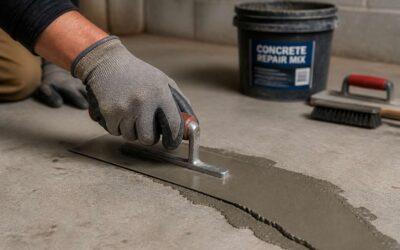
Surface grinding works differently from slab lifting. Where mudjacking raises concrete from below, diamond segmented grinders shave the high spots of a heaved floor. The goal is a plane that no longer trips the foot or binds the door.
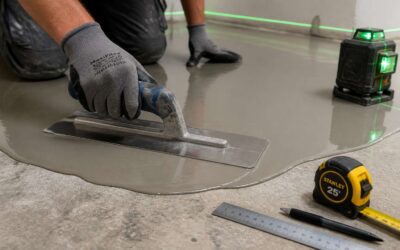
Leveling compounds follow the grinding pass. These self smoothing overlays fill the low swales left behind. For concrete floor heaving on a modest scale, this approach avoids drilling and pumping entirely.
Assessment remains essential. A grinder cannot fix a slab still rising from expansive clay. It only treats the symptom. The work order matters:
- Confirm the subgrade has stabilized.
- Grind the high edges.
- Apply leveling compound in thin coats.
- Seal the surface.
This method suits warehouses and older homes where a few millimeters of elevation is the only complaint.
Full Slab Replacement Considerations
Full slab replacement is the most invasive remedy for concrete floor heaving, yet sometimes it is the only durable one. When the subgrade has failed completely, or the slab is fractured into multiple planes, patching or lifting merely postpones the failure. The decision hinges on whether the soil beneath has been rendered stable.
Consider the condition of the existing slab. A single crack may be repairable. A network of fissures signals deeper distress. Replacement allows you to address the subgrade properly, installing moisture barriers and compacted fill before pouring anew.
This approach is disruptive. It interrupts operations and carries a heavy cost. But concrete floor heaving that returns after two or three repairs demands a reckoning. The question is not whether you can afford replacement, but whether you can afford another cycle of provisional fixes.
Underpinning and Deep Foundation Solutions
Sometimes the repair lies not in correcting the soil above, but in reaching past it. Underpinning and deep foundation solutions anchor the structure to load bearing strata well beneath the active zone. Where concrete floor heaving traces back to expansive clays or shifting fill, such as the black turf of the Highveld, shallow fixes will keep failing.
Helical piers and driven piles transfer the slab’s weight through the problem layer. The floor stands independent of moving ground. This matters when the heave source sits beyond the reach of moisture control or chemical treatment.
- Geotechnical boreholes to identify the stable bearing layer
- Load calculations for the slab and its future use
- Corrosion resistance of piers
- Access constraints within the building
The cost is significant, but deep foundations address the root cause. For buildings where concrete floor heaving has recurred for years, this may be the only permanent remedy.
Post-Repair Monitoring and Care
After any repair for concrete floor heaving, the work is far from complete. The soil retains its capacity to shift. You must observe the slab through at least one full seasonal cycle, ideally two. Moisture levels change with the rains on the Highveld, and the ground responds accordingly.
A repaired floor is not a cured one. Here is what I watch for:
- New hairline cracks near old repair points
- Changes in door alignment or window fit
- Subtle lifts in previously leveled sections
- Odd damp patches along the slab perimeter
Gauges installed during repair offer precise numbers. Record them monthly. Compare readings. Ignore small fluctuations; trace steady trends. That vigilance separates a lasting fix from a temporary pause.


0 Comments