Key Factors That Affect Concrete Raising Costs
Extent of Damage and Number of Slabs
When estimating the cost to raise concrete floor, the extent of damage is the first thing we assess. A single hairline crack requires minimal polyurethane or cementitious slurry, while severe settlement with stepped edges demands more material and precision. The number of slabs also changes the equation. Each additional slab means drilling more injection holes, pumping more compound, and spending more time on site.
- Depth of settlement, where gaps exceed 50 millimetres
- Crack networks that spread across multiple panels
- Reinforcement corrosion causing structural weakness
South African homeowners often overlook the cumulative effect of several slabs. We have seen projects where the cost to raise concrete floor doubled simply because five slabs, not two, needed lifting! Accurate measurement of affected areas prevents surprises.
Geographic Location and Regional Pricing
A quote for identical concrete raising work can differ by 40% depending on which province you call. That is the reality of geographic pricing in South Africa. The cost to raise concrete floor in Cape Town reflects higher diesel prices and stricter municipal regulations, while the same procedure in Pretoria often benefits from shorter travel distances for contractors.
Regional disparities also emerge from the local supply chain. Johannesburg contractors source polyurethane resin from nearby chemical distributors, reducing transport overheads. Coastal cities contend with humidity that affects curing times, indirectly influencing the cost to raise concrete floor.
- Travel distance from the contractor’s base to your site
- Fuel price fluctuations per region
- Number of competing concrete raising specialists nearby
We regularly see price gaps of R2,000 to R5,000 for similar work, simply because one homeowner chose a contractor from a different metro. This variability deserves attention before any budget is set.
Accessibility and Site Conditions
The driveway looked wide enough. It was not. A contractor’s pump truck needs 3.5 metres of clearance, and a single gatepost can render the job impossible with standard equipment. This is where the cost to raise concrete floor shifts dramatically. Obstacles like flower beds, boundary walls, and water features force crews to use longer hoses or manual mixing, adding labour hours.
Site gradient matters. A slope steeper than 10 degrees changes how polyurethane flows beneath the slab. Poor drainage compounds the issue. Wet soil absorbs resin differently, requiring extra product to achieve the same lift. Hiring a contractor who inspects the property first saves surprises. The cost to raise concrete floor often depends on details visible only in person.
- Distance from the road for pump access
- Overhead obstructions like carports or trees
- Existing floor coverings that must be cut away
Type of Concrete Surface (Driveway, Sidewalk, Patio)
For most homeowners, the concrete underfoot is simply a stage for daily life. But when that stage starts dipping toward the garage door or pooling water near the stoep, the physical character of the slab itself becomes the main actor. The cost to raise concrete floor is not a single number. It is a price built from the slab’s own personality, its thickness, its reinforcement, and the life it has lived.
A smooth, exposed driveway slab behaves differently than a broom-finished sidewalk or a tiled patio. The texture affects how the polyurethane resin seals the surface and how evenly it travels. A surface covered in paint, oil stains, or a rubberized coating acts as a barrier, forcing the crew to grind or chemically etch the top before any injection can begin. This preparation is fiddly work. It takes time, and time is money.
Then there is the question of the slab itself, its depth and condition. A thin sidewalk poured over soft soil will flex and crack more readily. A thick, reinforced driveway offers a stronger platform for lifting but resists the resin’s upward pressure. Crews must adjust their injection pattern, spacing the holes differently and using higher pressure. This requires more precise work, which raises the bill. Consider the different surfaces you might need to address:
– Driveways: heavily trafficked, thicker, often requiring more product and careful pressure management.
– Sidewalks: thinner, more prone to cracking, but quicker to lift.
– Patios: often decorative, requiring neat, minimal holes and a careful hand.
Ultimately, the crew is working with the slab’s own history of load, weather, and ground movement. The labour is physical and the calculations are constant. That is why the cost to raise concrete floor can feel so personal. It is not a commodity; it is a repair designed around a specific, stubborn piece of your property.
Price Comparison by Lifting Method
Mudjacking Rates and What They Include
Mudjacking remains the most common method for lifting sunken slabs, and for good reason. It is generally the most economical option when compared to polyurethane foam injection, which uses more expensive materials. The cost to raise concrete floor with mudjacking typically falls between R250 and R450 per square meter in South Africa. This price range reflects the slurry mixture, which is a blend of cement, sand, and water, and the labour required to pump it beneath the slab.
The quoted rate usually includes the drilling of access holes, the pumping of the slurry, and the patching of those holes after the lift is complete. However, the cost to raise concrete floor using this method can increase if the void beneath the concrete is exceptionally large. More slurry means more material, which directly impacts the final bill. Contractors often price the service based on the anticipated volume, so a sunken corner might cost less than a full slab with a significant void.
– The distance the pump truck must travel from the mixing site.
– The time required for the slurry to cure before the area is usable.
– The contractor’s minimum call-out fee, often set to cover smaller jobs.
For many homeowners, the appeal lies in the lower upfront expense. While foam injection offers a cleaner application and quicker curing times, mudjacking provides a reliable fix that is easier on the wallet. It is a practical solution that handles the structural need without the premium price tag, making it a solid baseline for anyone researching the immediate financial outlay.
Polyurethane Foam Injection Costs
Polyurethane foam injection tells a different story when the conversation turns to price. Where mudjacking leans on economy, foam leans on precision. The cost to raise concrete floor with this method typically starts around R600 and climbs to R900 per square meter in South Africa, reflecting the advanced resins and specialized equipment involved.
The material itself is the primary driver. High density foam expands on contact, filling voids with remarkable accuracy and curing in under an hour. That speed reduces downtime, though it does not reduce the invoice. Contractors factor in:
– The type of foam selected, standard vs. high density
– The depth of the void beneath the slab
– The number of injection points required
For a homeowner weighing options, the cost to raise concrete floor with foam offers long term stability. The tradeoff is the upfront premium.
Alternative Solutions and Their Cost Ranges
Comparing lifting methods side by side reveals a clear tradeoff between economy and permanence. Mudjacking offers the lowest upfront cost to raise concrete floor, typically R400 to R700 per square meter, but foam’s precision often justifies its R600 to R900 range. However, some slabs need more than lifting. Alternative solutions include:
- Full concrete replacement, running R1,200 to R2,500 per square meter, including demolition and disposal
- Self-leveling compound for minor dips, at R300 to R500 per square meter, though it cannot correct structural settlement
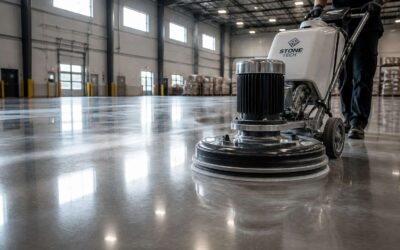
- Grinding and polishing when the surface is uneven but stable, costing R150 to R350 per square meter
These options change the calculus entirely. For instance, a severely cracked driveway may require replacement, making the cost to raise concrete floor moot. In my experience, homeowners sometimes pay twice for lifting a slab that ultimately needed replacement. The slab’s integrity determines which method makes sense.
Additional Costs and Hidden Expenses
Crack and Joint Repair
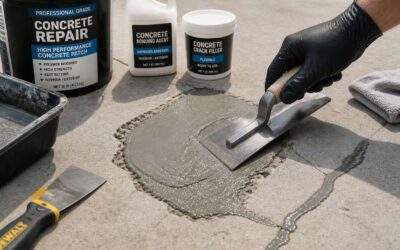
Cracks and joints need attention before any lifting begins. A hairline fracture might accept polyurethane foam directly. Larger fissures require routing and filling. This prep work adds to the cost to raise concrete floor. Technicians often seal control joints with a flexible membrane to prevent further movement. Material alone runs between R50 and R150 per linear metre. Labour adds another layer.
If the slab has settled unevenly, a crack may span the full slab depth. That changes everything! You might need epoxy injection. In my experience, this can cost more than the raising itself. Some contractors quote this separately. Others bundle it into the total. The final figure depends on which approach the contractor prefers.
Complex crack patterns demand more involved solutions:
- Crack stitching with carbon fibre staples
- Full-depth saw cutting to create clean break lines
- New expansion joint installation where none exist
Each option carries its own price tag. Overlooking these details on your written quote creates surprises later.
Sealing and Waterproofing
Of all the line items that can ambush your budget, water management sits quietly in the corner waiting for its moment. Most homeowners fixate on the lifting compound itself. They forget that a raised slab is only as good as the seal protecting it. The cost to raise concrete floor often excludes the sealing and waterproofing that should follow immediately after the foam cures. Leaving the work exposed to moisture invites a repeat performance of settlement within a few seasons.
Water seeks the path of least resistance. It will find the gap between your newly raised slab and the adjacent foundation wall. It will pool against the perimeter where the driveway meets the garage floor. Ignoring these contact points undermines the entire project. Contractors typically apply a polyurethane sealant along all exposed edges after a lift. This application runs around R75 per linear metre. The cheap stuff cracks within a year. The professional grade product bends with the earth’s subtle movements.
Some properties demand more than a simple bead of sealant. Hydrostatic pressure from a high water table can push moisture through the slab itself. In these cases, you need a crystalline waterproofing slurry applied to the surface. This is where the budget truly expands. A comprehensive waterproofing membrane for a standard garage floor of forty square metres costs between R4,500 and R9,000.
– Surface preparation with acid etching to ensure adhesion
– Two coats of elastomeric waterproofing paint
– Damp proof course installation where the slab meets the wall
– Drainage channel installation for persistent problem areas
The quotes you receive will vary wildly on these extras. Some contractors include basic edge sealing in their raised price as a courtesy. Others will present it as a mandatory upsell at the final invoice stage. That is when the cost to raise concrete floor transforms from a simple number into a negotiation exercise. Ask the contractor upfront whether any waterproofing is included in the quoted price. Get the answer in writing. The distinction between R8,000 and R18,000 for a complete job often lives entirely in this overlooked line item.
Permit and Inspection Fees
Permit and inspection fees are the quiet ambushers in any slab raising project. Many homeowners assume that because the work happens on their property, the municipality has no say. That assumption carries a heavy price. In South Africa, most metros require a building plan submission before any structural alteration, including foam injection or mudjacking. The cost to raise concrete floor suddenly grows when you factor in plan approval fees, which range from R1,500 to R4,000 depending on the municipal valuation of your home.
Inspection fees add another layer. A structural engineer must certify the lift after the foam cures. That certificate costs between R2,500 and R5,500. Skip the permit and you risk a fine that doubles the original quote. Typical requirements include:
– Formal application to the local authority
– Engineer’s stamp on the lifting method
– Final inspection after completion
These fees are rarely mentioned in the initial quote. Ask for them in writing before any drilling begins.
Equipment Rental and Cleanup Charges
Once the paperwork is settled, the physical work introduces its own set of surprises. The equipment required to lift a slab is not part of the standard quote. Contractors typically charge a daily rate for the mixer, the hydraulic pump, and the hoses that snake from the truck to your foundation. For a polyurethane foam job, the rig arrives fully loaded, but the delivery charge alone can range from R1,500 to R2,800, depending on your suburb’s distance from their depot. This is the point where the cost to raise concrete floor begins to feel like a slowly ticking meter.
Cleanup charges are another line item that quietly inflates the total. Mudjacking produces a slurry that needs to be hosed down before it dries into a cement-like crust. Foam injection leaves behind drill holes that require patching, and the excess foam that bubbles out must be chiselled away after curing. Some contractors include this in their base price, but many do not. Renting a concrete grinder to smooth the patch points will set you back an additional R450 per day, and the disposal of any broken debris, if a section needs to be jackhammered, adds a skip fee of R900 or more.
These operational costs are often the difference between the lowball estimate and the final invoice. A transparent contractor will itemise them upfront, but you should always ask for a breakdown that separates labour from equipment. To keep the project on budget, verify these specific charges before signing:
– Daily rental for the injection pump or grout mixer (R600 to R1,200 per day)
– Delivery and setup fee for the machinery (R1,500 to R2,800)
– Debris removal and disposal, including contaminated soil (R500 to R1,500)
– Pressure washing of the driveway or patio to remove residual slurry (R300 extra)
The final invoice also reflects the labour required to manage all this equipment. A crew of three will spend nearly as much time loading, cleaning, and packing as they do on the actual lift. That labour is billed at an hourly rate of R250 to R400 per person, and it adds up quickly when the job stretches past a single day. The cost to raise concrete floor is ultimately a sum of these logistical details, not just the material injected beneath the surface. Furthermore, if the site has no water access for cleanup, the crew must haul their own supply in a bowser, and that rental fee will also appear on your statement. Factor in the time it takes for the foam to reach full strength, which typically requires a return visit for the final patch, and you see why these hidden expenses demand as much attention as the lift itself. Ask for a flat rate that includes all rental and cleanup, or you will find yourself paying for the contractor’s convenience by the hour. Loadshedding can also delay the curing lights used in colder months, which forces the crew to reschedule, often at an additional call-out fee.
Surface Finishing and Decorative Options
A level slab can still look battle scarred. The cost to raise concrete floor often excludes the finishing touches that make the repair invisible. I’ve watched homeowners wince when they see patch marks from foam injection standing out against weathered concrete.
Decorative options change the final number. Stamping, staining, or adding a new broom finish affects the total. A basic patch runs R350 per square metre. A tinted sealer or textured overlay pushes that higher.
Consider these finishing choices:
- Broom finish matching (R150 to R250 per square metre)
- Acrylic stain or dye (R200 to R400 per square metre)
- Exposed aggregate resurfacing (R450 to R700 per square metre)
The cost to raise concrete floor climbs when you insist the repair disappears into the surrounding surface. Homeowners budget for the lift but forget the finish.
Potential Structural Repairs
Beneath the slab, problems hide. A sinking floor sometimes masks cracked pipes, poor compaction, or tree root intrusion. The cost to raise concrete floor assumes the substrate is sound. That assumption fails more often than contractors admit.
Structural repairs surface after lifting begins. A section that refuses to rise may indicate rebar corrosion or a fractured slab edge. Those fixes add R2,000 to R8,000 depending on severity.
- Geotechnical soil testing (R1,500 to R3,500)
- Under-slab drainage correction (R4,000 to R12,000)
- Rebar splicing or patching (R1,800 to R6,000)
Water damage accelerates concrete deterioration. Moisture testing catches it early. Skip it, and the cost to raise concrete floor doubles when the slab crumbles under pressure.
Estimating Your Project Budget
Average Cost per Square Foot
Estimating your project budget starts with the average cost per square foot. In South Africa, slab lifting typically runs between R250 and R450 per square metre, depending on the method and the contractor’s overheads. This baseline gives you a reference point, but the true cost to raise concrete floor emerges only after a site assessment.
Build your estimate with a clear structure:
- Measure the full affected area, including adjoining slabs that may shift during lifting
- Request itemised quotes from at least three contractors specialising in slab raising
- Reserve 10% to 15% for unforeseen ground conditions or hidden voids
These steps produce a realistic range. The final cost to raise concrete floor will settle somewhere within that range, and the average per square foot simply anchors your expectations before the detailed quotes arrive.
Size-Based Estimate Examples
I have watched a 15 square metre garage slab come in at R4,500, while a 60 square metre warehouse floor ran past R18,000. The cost to raise concrete floor scales with footprint, but not in a straight line. Larger areas demand longer pumping distances, more slurry, and often extra crew hours.
Consider these size-based examples:
- A 10 m² patio: R2,500 to R4,500
- A 20 m² garage floor: R5,000 to R9,000
- An 80 m² industrial slab: R20,000 to R36,000
The cost to raise concrete floor on a small residential slab stays predictable. On a big commercial floor, hidden voids multiply the risk, and the estimate shifts accordingly.
Ways to Lower Your Concrete Lifting Costs
Bundle Multiple Slabs or Services
One contractor told me that bundling multiple slabs is the simplest way to reduce the cost to raise concrete floor. When you request a single quote for one sunken step, you absorb all the mobilization and travel expenses. Add a second slab and those fixed costs spread across more work. Add a third and the per square metre price drops noticeably.
Bundling services in one visit helps too. Consider these options:
- Pair a house slab with the driveway apron for a combined rate
- Level several sidewalk sections in one pass
- Group porch steps with a patio extension
Some companies provide a package rate when you commit to multiple concrete repairs at once. That transparency lets you plan without surprises. You also skip repeated site visits, which means less disruption to your daily rhythm. That is real value, not a negotiation trick.
Choose Off-Peak Scheduling
In the concrete repair trade, a quiet calendar is a negotiable one. Contractors across South Africa often reduce their rates by as much as 20% when demand cools. That margin makes the cost to raise concrete floor more manageable without sacrificing quality.
Scheduling your project midweek or during the winter months unlocks real savings. Crews in Johannesburg or Cape Town face heavy strain during summer and month-end weekends. When a contractor has an open slot, they accept lower margins to keep the team active.
- Weekday mornings before 9am avoid peak hour travel.
- Winter months from June to August see reduced construction demand province-wide.
Ask direct questions about their slow season. Some companies publish off-peak rates openly, while others negotiate case by case. Your willingness to wait gives you leverage, and the contractor gains predictable work. This flexibility can lower the total cost to raise concrete floor on your property.
Get Multiple Quotes and Compare Details
Getting multiple quotes is the first step, but comparing them properly is where the real savings appear. Some contractors quote a flat price, while others itemize every charge. That difference can hide or reveal expenses. When you receive three estimates for the cost to raise concrete floor, look beyond the bottom line.
Check what each quote includes in terms of labour, materials, and preparation work. For example, one bid may cover crack filling, another treats it as extra. Review the proposed method as well.
– Number of injection points
– Amount of material (grout or foam)
– Cleanup and post-job inspection
These variables alter the final figure. A low quote might exclude essential steps. A higher quote often reflects thorough work. Comparing details rather than prices alone ensures you choose a fair deal for the cost to raise concrete floor.
Consider DIY Options with Rental Equipment
Renting equipment shifts the economics of a project. Skipping a contractor’s overhead means you pay for the machine and your own labour. In my experience, this rarely makes sense for a single slab. The cost to raise concrete floor involves mobilisation fees, and those are spread thinly when you do the work yourself.
A rental pump costs a daily rate, and grout is sold by the bag. You also need a drill and a mixing paddle, plus patience. Suppliers in South Africa sometimes offer training with the rental, saving you from costly mistakes.
- Ensure the pump’s output matches your slab size
- Confirm the rental includes hoses and nozzles
- Ask about cleanup chemicals before you commit
The labour is intense. Mud is heavy, and the pump needs constant attention. The cost to raise concrete floor can drop by half, but only if you finish in one rental day.
Negotiate with Contractors for Best Value
Negotiation begins with the breakdown, not the final number. Ask the contractor to separate labour, materials, and equipment on the quotation. This reveals where the cost to raise concrete floor can be trimmed without weakening the work itself. A contractor who refuses to itemise may be hiding margin in the details, and that margin is your negotiating room.
- Request a revised quote after removing unnecessary surface finishing
- Offer to handle basic site preparation such as clearing furniture
- Ask if cash payment unlocks a discount
In my experience, contractors respect a client who understands the process. A direct conversation about budget limits often produces a tailored proposal. Many contractors in South Africa quote high initially, expecting a counteroffer. The cost to raise concrete floor is negotiable when you show flexibility on timing and access. The final figure reflects the conversation you are willing to have, so bring specifics and keep the discussion practical.

0 Comments